Wheelchair pickleball rules: bounces, serving and the kitchen
Short answer: Under the 2026 USA Pickleball rules, wheelchair players may let the ball bounce twice. Rear wheels determine serving position and kitchen contact during volleys; front and stabilizing wheels have specific exceptions.
Wheelchair pickleball keeps the recognizable game while changing a few rules that affect how a rally is played. The important differences are not an informal favor from an opponent. They are written into USA Pickleball's 2026 rules for inclusive play.
The official wheelchair quick reference points players and referees to Section 25.A. It explains the extra bounce, which wheels determine serving position, and what counts as entering the non-volley zone during a volley. These are the details to settle before a mixed group starts its first game.
This guide reports that USA Pickleball framework. A competition using another rulebook may have different conditions. Ask the organizer which rules apply rather than assuming that every tour, country or club uses an identical system.
The extra bounce belongs to the wheelchair player
A wheelchair player may allow the ball to bounce twice before returning it. The second bounce may be anywhere on the playing surface. The rulebook's overview says the first bounce must be in the court; the second-bounce allowance does not turn a first bounce outside the court into a good shot.
That makes the allowance different from the standard opening two-bounce rule. In standard pickleball, the serve must bounce before the receiver returns it, and that return must bounce before the serving team hits it. That opening sequence is not the same thing as allowing a wheelchair player two bounces on a shot.
The distinction matters in a game with both standing and wheelchair players. Do not give a standing opponent a second bounce simply because the person on the other side uses a wheelchair. The official page says the wheelchair-specific rules apply to the player using the chair, regardless of opponents or partners.
USA Pickleball's adaptive resources page also makes the limit clear: letting the ball bounce three times is a fault. A second bounce is permitted, not required. A player can choose to return a playable ball earlier instead of waiting for the extra bounce.
Serving position is measured by the rear wheels
When the serve is hit, both large rear wheels must be on the playing surface behind the baseline. They must also be within the correct serving area. The front, smaller wheels may extend into the court at contact.
A standing player's foot position is therefore not a useful shortcut for judging the chair. Looking only at a front wheel that projects across the baseline could produce the wrong call. The official quick reference specifically gives those front wheels an exception.
For a pre-game discussion, identify the baseline and the imaginary extensions defining the correct serving area. Then focus on the large rear wheels at the moment of the serve, rather than where the chair started or where it rolls afterward. The rule concerns the position at contact.
This is a positioning adjustment, not a reason to make up a separate serve format. Read the event's applicable serving rules alongside the wheelchair modifications if a question about the ball release or paddle motion comes up.
Kitchen rules depend on which wheels make contact
The non-volley zone, often called the kitchen, remains important. USA Pickleball treats a wheelchair as part of the player's body. Its large rear wheels are treated like a standing player's legs for positioning.
The smaller front wheels and rear stabilizing wheels may touch the non-volley zone at any time under the wheelchair quick reference. That exception does not extend to the large rear wheels during a volley. If a large rear wheel touches the non-volley zone while the player volleys, it is a fault.
The rule also covers things in contact with the volleying player, including the player's partner. A player cannot avoid a kitchen fault merely because the relevant contact was through another person rather than a direct wheel touch.
Momentum matters after contact too. If the volleying player's momentum causes a large rear wheel to contact anything in contact with the non-volley zone, the rule describes a fault even after the ball becomes dead. A successful-looking winner does not erase that follow-through.
The practical question is therefore specific: was this a volley, and did a large rear wheel or another covered contact touch the non-volley zone? Calling every small-wheel touch a kitchen violation would ignore the stated exceptions.
A chair does not confine a player to wheelchair-only events
The 2026 quick reference defines an eligible wheelchair player as anyone, with or without a disability, who plays in a wheelchair. It also says wheelchair players can enter tournament events other than adaptive standing-only events.
Partners and opponents may be standing players, adaptive standing players or wheelchair players. Only wheelchair players may enter wheelchair-only events. Whichever format is used, the wheelchair-specific rules still apply to the player using the chair.
That distinction helps organizers avoid treating a hybrid match as an improvised version of the sport. The rules anticipate mixed participation. Event entry conditions still need checking, but a standing opponent is not, by itself, a reason to remove the chair user's bounce allowance.
Check the space beyond the lines
USA Pickleball's adaptive resources recommends a 44-foot-wide by 74-foot-long playing surface for wheelchair play, with 50 by 80 feet mentioned for larger stadium-style matches. Those figures describe playing space, not a claim that the marked pickleball court changes to those dimensions.
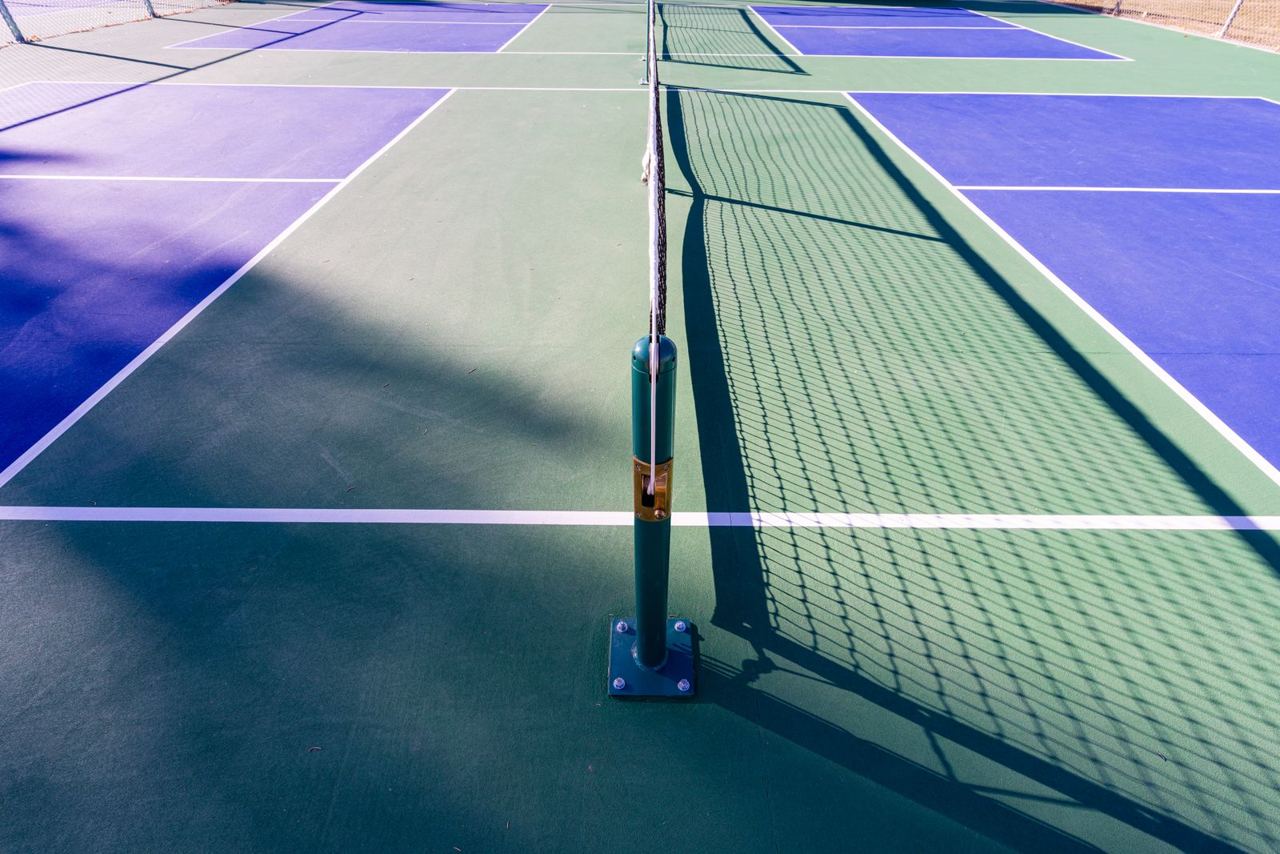
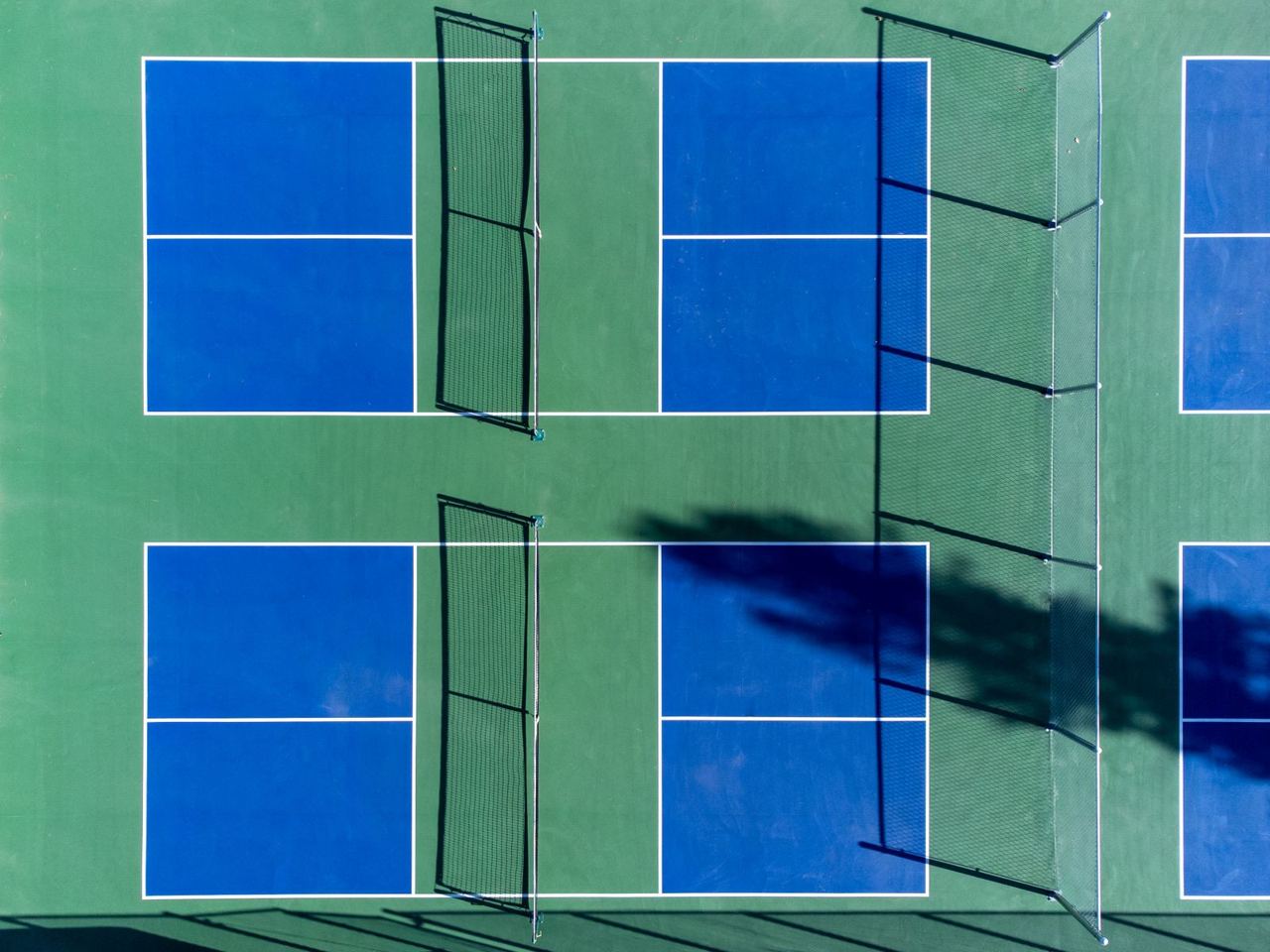
Before choosing a venue, ask about clear movement space around the court, access to it and the event's setup. A photograph showing the correct painted lines cannot establish accessible entry or usable clearance behind the baseline. The stock courts in this guide are illustrations, not an accessibility assessment of a named venue.
Frequently asked questions
Can wheelchair players take two bounces against standing opponents?
Yes. The official quick reference says wheelchair-specific rules apply to any player using a wheelchair, regardless of the classification of their opponents or partners. That does not give a standing player the same allowance.
Can the front wheels enter the kitchen during a volley?
The smaller front wheels and rear stabilizing wheels may contact the non-volley zone at any time under the wheelchair rules. The large rear wheels are treated differently and can cause a volley fault.
Does a second bounce outside the court make the ball out?
The second bounce may be anywhere on the playing surface. The first bounce must still be in the court. The allowance is not permission to play a first bounce that was already out as though it were in.
Sources
* Photos: Pexels stock-photo licence. Illustrative courts, not a verified accessible venue. Rules checked against USA Pickleball's current 2026 wheelchair quick reference on October 13, 2026.